
In a world buzzing with gadgets and gizmos, the quest for sustainable battery technology has never been more electrifying. As people juggle their daily lives with a growing concern for the planet, the need for eco-friendly power sources has surged. Imagine a future where your devices run on batteries that not only last longer but also leave a lighter footprint on Mother Earth. Sounds like a dream, right?
Overview of Sustainable Battery Technology
Sustainable battery technology focuses on creating batteries that minimize environmental impact while providing reliable energy storage. Various innovations in materials aim to reduce reliance on toxic elements like cobalt and lead. Lithium-ion batteries dominate the market, but alternatives such as sodium-ion, solid-state, and organic batteries are gaining traction.
Sodium-ion batteries, for instance, utilize abundant materials and offer similar performance levels to lithium-ion batteries. Solid-state batteries promise increased safety and efficiency, as they eliminate flammable liquid electrolytes. Organic batteries leverage renewable resources, reducing carbon emissions throughout their lifecycle.
Recycling initiatives also contribute significantly to sustainability. Companies are developing processes that recover valuable materials from spent batteries, reducing the need for new raw materials. Research shows that effective recycling can recover up to 95% of lithium, cobalt, and nickel.
Regulatory measures also promote sustainable practices. Governments worldwide are establishing guidelines that encourage manufacturers to adopt greener technologies. These initiatives aim to support a shift towards cleaner energy solutions, including sustainable battery production.
Investment in research and development is vital for advancing sustainable battery technology. Innovations in energy density and charging speed lead to improved battery performance. Enhanced functionality can increase the adoption of electric vehicles and renewable energy systems, contributing to a greener future.
By focusing on sustainable practices and alternative materials, the battery industry can significantly reduce its environmental footprint while meeting the growing demand for energy storage solutions.
Types of Sustainable Battery Technologies
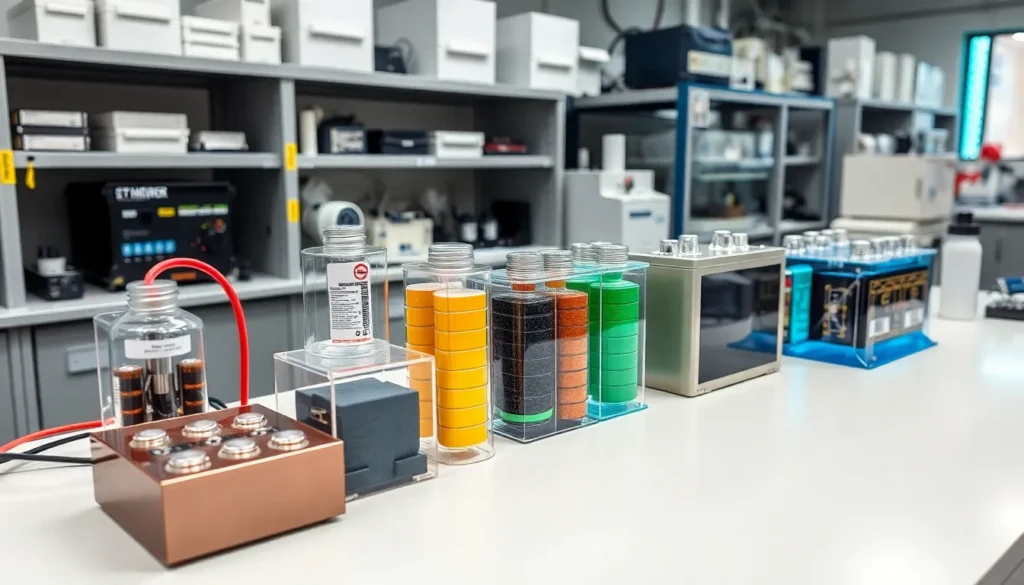
Sustainable battery technologies are crucial for reducing environmental impact while meeting energy demands. Several innovative options exist beyond traditional lithium-ion batteries.
Lithium-Ion Alternatives
Sodium-ion batteries represent a prominent alternative. They use abundant sodium instead of scarce lithium, potentially decreasing costs and environmental harm. These batteries can operate effectively in a wider temperature range, making them suitable for various applications. Researchers are also exploring lithium-sulfur configurations, which promise higher energy density and longer cycle life. Other options include magnesium-ion batteries, offering enhanced safety features by eliminating flammable electrolytes.
Solid-State Batteries
Solid-state batteries exhibit significant advantages over conventional designs. By replacing liquid electrolytes with solid materials, these batteries enhance safety and energy density. Their construction prevents leakage and reduces the risk of thermal runaway incidents. Research indicates that solid-state designs can achieve twice as much capacity compared to lithium-ion batteries. Companies are investing heavily in developing scalable production methods for solid-state technologies, anticipating widespread adoption in electric vehicles and consumer electronics.
Flow Batteries
Flow batteries provide unique benefits for large-scale energy storage. They operate using two electrolyte solutions that circulate through a cell, allowing for modularity and scalability. This design enables long durations of energy discharge, making them ideal for grid energy storage and renewable integrations. Flow batteries can offer quick charge and discharge cycles, supporting energy stability. Research shows these batteries can support multiple charge cycles without significant degradation, extending their operational lifespan while minimizing waste.
Benefits of Sustainable Battery Technology
Sustainable battery technology offers numerous advantages for both the environment and the economy.
Environmental Impact
Sustainable batteries reduce reliance on toxic materials, minimizing environmental degradation. For instance, sodium-ion batteries rely on abundant sodium, reducing resource scarcity. Alternatives like lithium-sulfur batteries provide higher energy density with fewer environmental concerns. Solid-state designs enhance safety by using non-flammable materials, lowering risks associated with conventional batteries. Recycling processes recover up to 95% of valuable elements from spent batteries. Implementing these practices fosters a circular economy, lessening the overall carbon footprint of energy storage solutions. These improvements play a crucial role in mitigating climate change effects and promoting cleaner energy integration.
Economic Advantages
Economic benefits arise from the reduced costs associated with sustainable battery technologies. Sodium-ion batteries, for example, avoid high costs linked to lithium and its extraction. Lower production costs translate into more affordable consumer electronics and electric vehicles. Enhanced safety features within solid-state batteries minimize accident-related losses, promoting reliability in the marketplace. Investments in research and development drive competitive advancements, creating jobs while supporting innovation. Companies adopting greener technologies benefit from regulatory incentives that encourage sustainable practices. When aggregated, these economic advantages contribute to a more resilient and sustainable energy ecosystem.
Challenges in Developing Sustainable Battery Technology
Developing sustainable battery technology faces several notable challenges. Addressing these obstacles is essential for advancing eco-friendly solutions.
Material Sourcing
Material sourcing presents significant challenges. Obtaining lithium, cobalt, and nickel raises concerns about ethical mining practices and environmental degradation. Resources such as cobalt are scarce and often sourced from regions with problematic labor conditions. Moreover, reliance on lithium-ion batteries can exacerbate resource scarcity over time. Innovations in alternative materials, like sodium, offer some promise but raise the question of sourcing stability. Ensuring sustainable and responsible supply chains is crucial for long-term adoption of new battery technologies.
Recycling and Disposal
Recycling and disposal create additional hurdles. Battery materials can be toxic, posing risks during improper disposal. Effective recycling technologies are necessary to recover valuable materials and minimize waste. Current processes achieve only partial recovery rates, with up to 95% achievable in ideal scenarios. Moreover, developing standardized recycling practices across regions complicates efforts. Establishing a robust circular economy hinges on improving battery recycling processes, fostering increased consumer participation, and creating a responsible disposal network.
Future Trends in Sustainable Battery Technology
Innovations in sustainable battery technology are anticipated to reshape the industry. Sodium-ion batteries are becoming increasingly prominent due to the abundance of sodium, which poses lower environmental risks compared to lithium. Electric vehicles are likely to benefit from these new technologies, as manufacturers seek cost-effective solutions with less reliance on scarce resources.
Lithium-sulfur batteries are capturing attention for their ability to deliver higher energy density. They allow for longer-lasting energy storage with fewer environmental concerns, making them an attractive option for future applications. Solid-state batteries gain recognition for their enhanced safety features and energy density, which could potentially double the storage capacity compared to traditional lithium-ion configurations.
Flow batteries stand out for their modular design and scalability. These systems excel in large-scale energy storage, supporting quick charge and discharge cycles essential for renewable energy integration. Enhanced performance and longevity enable flow batteries to dominate grid energy storage solutions.
Sustainability is a driving force behind these developments. Companies are prioritizing responsible sourcing and recycling practices to mitigate environmental impact. Advances in recycling technologies aim to recover up to 95% of valuable materials from spent batteries, significantly reducing waste and promoting a circular economy.
Regulatory incentives and investments in research are spurring innovation. These efforts create jobs while fostering a sustainable energy ecosystem that can adapt to climate change challenges. As sustainable battery technologies continue to evolve, their integration into consumer electronics and electric vehicles positions society toward a greener future while addressing pressing environmental concerns.
Sustainable battery technology represents a pivotal shift toward a greener future. As innovations in sodium-ion, lithium-sulfur, and solid-state batteries gain traction, they promise to deliver safer and more efficient energy solutions. The focus on reducing reliance on toxic materials and enhancing recycling processes underscores a commitment to environmental stewardship.
The ongoing advancements not only aim to lower production costs but also enhance the reliability of energy storage systems. By prioritizing responsible sourcing and fostering a circular economy, the industry is poised to tackle the challenges of climate change effectively. Embracing these technologies will play a crucial role in creating a sustainable energy landscape that benefits both consumers and the planet.