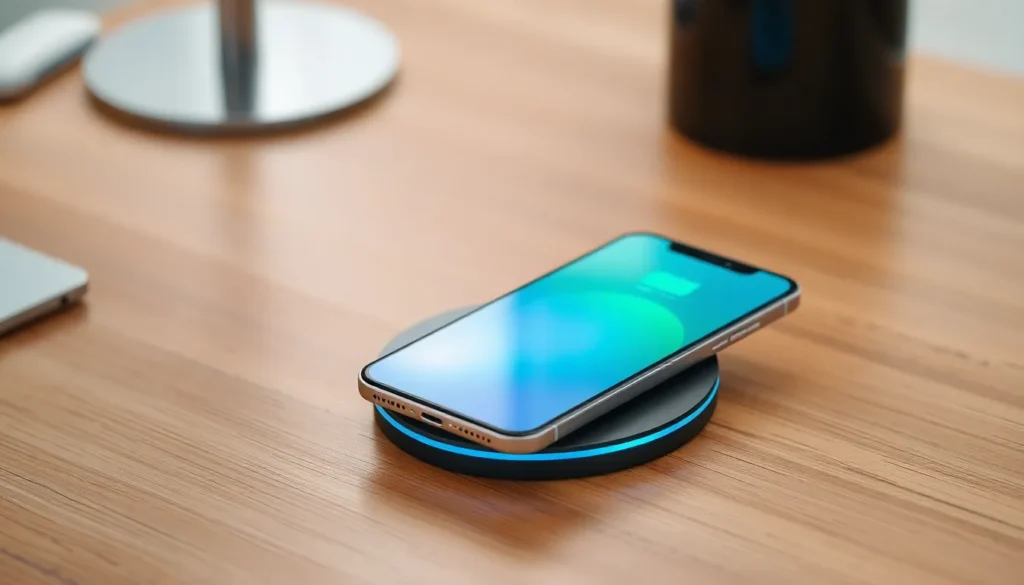
In a world where cords seem to multiply like rabbits, wireless chargers swoop in like superheroes, saving the day and your sanity. Imagine a life where you can simply plop your phone down and watch it power up without the tangled mess of cables. It’s not just a dream; it’s the magic of wireless charging!
Overview of Wireless Chargers
Wireless chargers use electromagnetic fields to transfer energy from the charger to the device. This technology eliminates the need for physical connections. Users appreciate the simplicity of charging their smartphones and tablets by merely placing them on a charging pad.
Different types of wireless charging standards exist, with Qi being the most common. Qi technology operates on inductive charging, creating a magnetic field that transfers energy. This method supports a wide variety of devices, including smartphones and smartwatches.
Charging speeds for wireless chargers vary significantly. While some chargers offer standard speeds of 5 watts, others reach up to 15 watts or more. Efficient models typically charge devices at optimal speeds without overheating.
Design plays a critical role in the appeal of wireless chargers. Sleek, compact designs fit seamlessly into modern environments. Many options come with added features like LED indicators and multiple device support.
Compatibility remains an essential consideration for consumers. Most smartphones released in the last few years support wireless charging. Users should always verify device compatibility before purchasing a charger to avoid inconvenience.
Portable wireless chargers are also gaining popularity. Battery packs allow users to charge devices on the go without needing wall outlets. These chargers often include multiple charging pads, enhancing flexibility.
Safety features are integral to many wireless charging solutions. Overcurrent protection, temperature control, and foreign object detection enhance user experiences. Such features prevent potential damage to both the device and the charger.
How Wireless Chargers Work
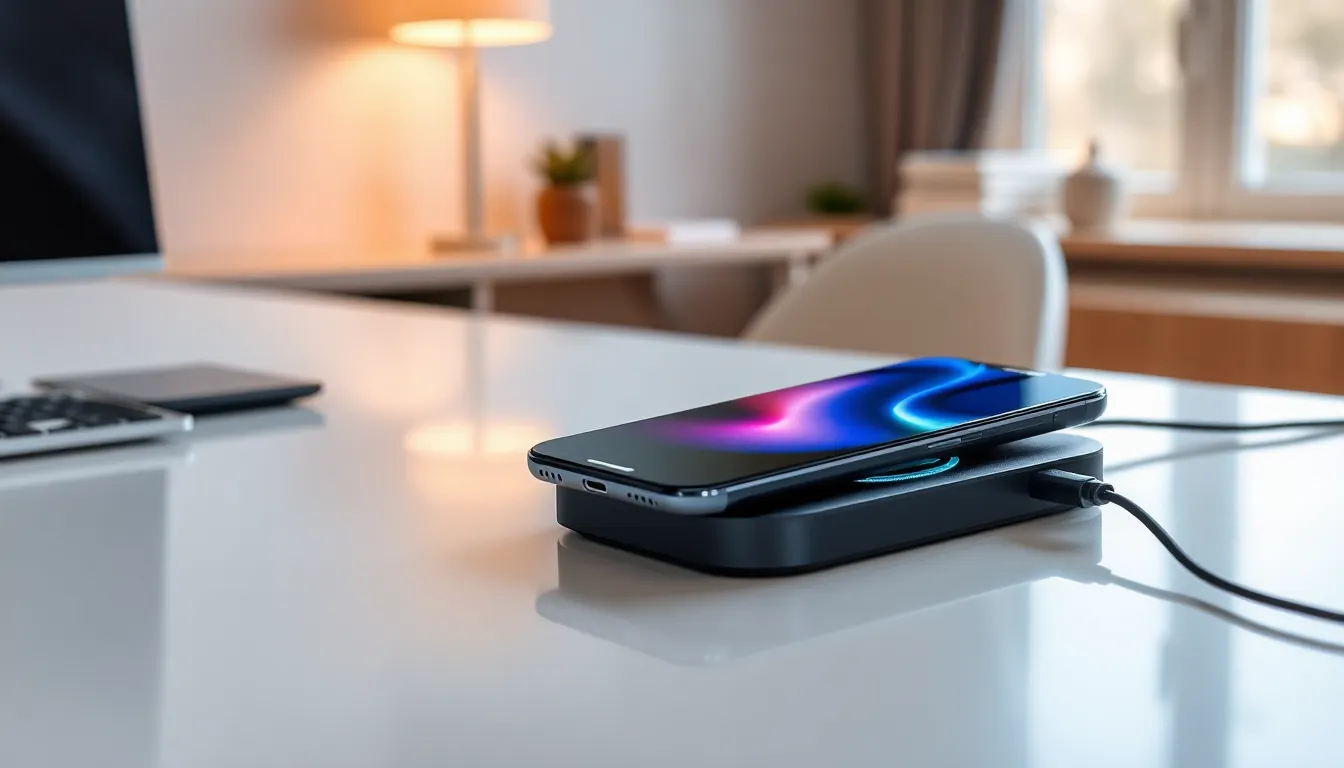
Wireless chargers utilize electromagnetic fields to transfer energy. This process allows devices to charge without any physical connection to a power source, providing convenience for users.
Inductive Charging Technology
Inductive charging technology focuses on two coils: the transmitter coil within the charger and the receiver coil inside the device. When the charger and the device align, an alternating current flows through the transmitter coil. Magnetic fields then generate current within the receiver coil, converting it back into usable energy. This process effectively transfers power wirelessly. Many smartphones and wearables utilize this method, offering compatibility with the Qi standard. Charging speeds often range between 5 watts and 15 watts, achieving efficient charging without overheating.
Resonant Inductive Charging
Resonant inductive charging works on a different principle, using resonant magnetic coupling. This method allows coils to operate at the same resonance frequency, enhancing energy transfer efficiency. With this technology, devices can charge from a greater distance compared to traditional inductive charging. Users find it beneficial, especially in multi-device charging scenarios. This approach offers flexibility, permitting users to place devices on charging surfaces without precise alignment. Some high-performance wireless charging stations, capable of charging multiple devices simultaneously, use resonant inductive charging to improve user experience and convenience.
Advantages of Wireless Chargers
Wireless chargers offer several benefits that enhance user experience and overall convenience. They simplify the charging process by eliminating tangled cords and the hassle of plugging and unplugging devices.
Convenience and Ease of Use
Convenience stands out as a primary advantage of wireless chargers. Users can simply place their devices on a charging pad, allowing for effortless charging. No need to fumble with cables or ensure proper connections. Some models support multiple devices, making them ideal for households with various gadgets. Additionally, many wireless chargers feature LED indicators, providing straightforward feedback on charging status. This user-friendly design aligns well with today’s fast-paced lifestyle, making accessing power sources easier and more efficient.
Reduced Wear on Charging Ports
Reduced wear on charging ports significantly contributes to the appeal of wireless chargers. Regularly plugging and unplugging devices can lead to port damage over time. Using a wireless solution minimizes this wear and tear, extending the lifespan of charging ports. This is especially important for devices that frequently undergo daily charging, like smartphones and tablets. Over time, this leads to fewer maintenance issues and enhanced device longevity. With wireless options, users can focus on their activities rather than worrying about potential damage to their devices.
Disadvantages of Wireless Chargers
Wireless chargers offer convenience, but they come with certain disadvantages that users should consider.
Charging Speed Limitations
Charging speed often falls short of expectations with wireless technology. Many standard wireless chargers deliver 5 watts of power, significantly slower than wired chargers that can reach 20 watts or more. Fast wireless charging options exist, but they usually max out around 15 watts, which still lags behind wired solutions. Users may experience longer wait times for their devices to reach a full charge. Additionally, factors like device alignment and case thickness can impact charging efficiency, leading to further delays. These speed limitations may deter some users who prioritize quick charging.
Compatibility Issues
Compatibility presents another challenge with wireless chargers. While most recent smartphones support the Qi standard, older models may lack this feature. Some tablet brands and devices do not function with wireless technology at all. Users must verify compatibility before investing in a charger to avoid disappointment. Furthermore, third-party accessories can sometimes lead to inconsistent performance, increasing the risk of charging failures. This can make finding a reliable charging solution frustrating for users with diverse device ecosystems.
Popular Wireless Charger Models
Numerous wireless charger models cater to diverse user needs. The Anker Wireless Charger tops the list for its efficiency and design, offering 10 watts of power for fast charging with a sleek, compact frame. Belkin Boost Up excels with support for compatible devices, delivering up to 15 watts. Users appreciate its dual-device charging capability, accommodating multiple gadgets simultaneously.
Apple’s MagSafe Charger stands out, particularly for iPhone users, providing a seamless connection that optimizes charging speeds up to 15 watts. Compatibility with cases enhances user convenience. Samsung Qi Wireless Charger is another popular choice, ideal for Galaxy device owners, facilitating speeds up to 15 watts while showcasing a stylish design that fits modern aesthetics.
For those needing portability, the RAVPower Portable Charger offers versatility. It’s equipped with a built-in battery, allowing users to charge devices on the go while supporting Qi and other charging standards. CHOETECH Wireless Charger provides an affordable option without sacrificing performance, delivering efficient charging thanks to its minimalist design.
The Samsung Wireless Charger Duo Pad accommodates two devices at once, making it perfect for households with various tech gadgets. With a charging speed of 12 watts per device, it keeps users connected effortlessly. Lastly, Spigen Mag charging pad emphasizes safety features. It integrates overcurrent protection, enhancing user confidence while charging.
These models reflect the latest advancements in wireless charging technology, providing users with reliable, efficient, and stylish options tailored to their everyday needs.
Wireless chargers represent a significant advancement in device charging technology. Their convenience and user-friendly design make them an attractive option for many. With the ability to charge multiple devices without the hassle of cords, they cater to the fast-paced lifestyle of today’s users.
While some limitations exist, such as slower charging speeds and compatibility issues, the benefits often outweigh the drawbacks. As technology continues to evolve, wireless charging solutions are likely to improve, offering even greater efficiency and convenience. Embracing this innovative charging method can enhance daily routines and simplify the way users power their devices.